
How To Enjoy A Peaceful Beach Walk as Sargassum Lessens
How To Enjoy A Peaceful Beach Walk as Sargassum Lessens
Nov 03, 2025
This blog post explores how calming your beach walk can be, as Sargassum on the shore diminishes
Have you noticed how different the beach and coastline look in November in comparison to the beginning of summer?
Imagine
Arriving at the beach to see large amounts of brown, vegetable-like substance on your walk path
Sargassum. A type of seaweed.
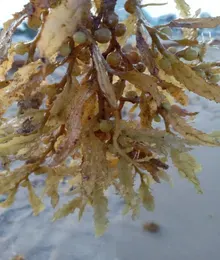
I was a bit annoyed. My expectation of a simple beach walk devoid of such blobs was unrealistic.
By now, you should know that beach walking is one of my favorite pastimes, and I assume yours too
I could feel the Sargassum beneath my soles, brushing against my feet as I walked on the shore
Annoying and uncomfortable? Yes it is
And
Don't mention the smell. Maaan!
The unpleasant, putrid scent permeates the atmosphere. polluting that whiff of sea air that helps in coastal wellness.
Stop for a minute. Sit on the sand.
The illusion of ships and sunset on the horizon is distorted before I even raise my eyes from the shore level.
Sargassum along the coastline. Arggh!
By then, I began to focus more on avoiding the annoyance than enjoying the atmosphere
BUT, but
I wasn't going to allow a little seaweed stop me
I adjusted, charted my course and made the best of my walk
Now guess what?
Look! Sargassum is lessening
Like good news from a far land. Less Sargassum on the horizon, less reaches the shore.
Back story:
Sargassum has been 'troubling' for coastal cities, especially the Caribbean and neighboring areas of North and Central America.
It actually originates elsewhere. The increasing use of chemicals and inorganic fertilizers which eventually run off into the ocean, has formed the basis for its nurturing. In addition to increasing pollution, the warming of the oceans has propelled the growth.
Some people attribute its spread to strong storms and violent wave actions. Its buoyancy has pushed it to other parts of the world.
The heat of summer, has led to increased production. Hence, we see larger amounts than at other times of the year.
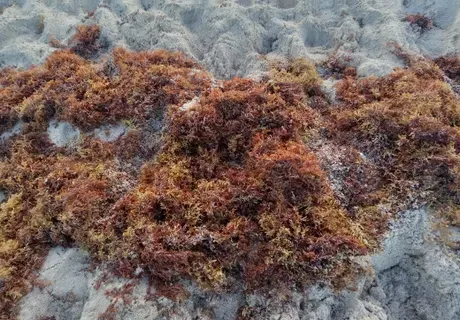
However, if you go to a popular beach, you may not get the real picture of the amount that actually lands there.
Why?
Because they use large motorized equipment such as tractors, which scrape the sand. This is part of their daily continuous clean-up program. And depending on the level of saturation, more frequent removal is done .
However, as temperatures fall, the amount of Sargassum lessens.
Yay!
What happens as it goes away?
Expectations rise
So
Let go of your Sargassum phobia
Mind you, I am not downplaying the presently unknown effects of Sargassum. And the disgust is not necessarily a phobia.
However, now that it is lessening, there are advantages.
You may hesitant to walk the beach
You may choose to stay in one place or find another location
Regardless, you will be happy. The beach seems to have become more inviting.
There seem to be more birds on the shore too. Even they seem happier. Less stuff to skip around, I guess.
Remember that foul scent, uhnn, almost non-existent.
Woohoo!
Yep. As the amount reduces, so do the flies. One less thing to worry about
So now more adults and their children can enjoy family activities on the shore. They can happily splash, build sandcastles and engage in other fun activities. So relaxing.
You can make natural photographic memories without having to edit or use an artificial background. And the shoreline becomes more visible as the amount of Sargassum reduces
Anyway, I understand your frustration. Just knowing that the amount is reduced may be encouraging. And you may choose to go to the beach right after it is cleaned
Anyway, if it can't tolerate it, avoid it. Take precautions.
Focus on your beach walk. Delightful!
But could there be any good, purposeful use or benefits of this 'thing'?
Appreciate what you can't change
Don't get me wrong, a little bit of Sargassum is tolerable
I, too, would prefer that it not be on the beach
Of course, it must be good for something. Actually a few things
It is now being considered for use as a biofuel, as fertilizer and in cosmetics. Ongoing research is revealing further uses.
As the process continues, we educate ourselves.
Residents and businesses in coastal communities may be especially interested in the uses of Sargassum.
As an organic fertilizer, it restores nutrients to sandy soil. It also aids in plant growth.
I still intend to use the fertilizer I processed last year
By the way, do you know that Sargassum plays a role in the marine ecosystem?
Even though Sargassum may be bothersome to us, it is a nesting and resting place for some tiny shore creatures
Think about it. You hardly see small crabs running on many popular beaches anymore. As other small creatures wash ashore, they become easy prey for shorebirds poking around in search of food.
To be honest, I only became aware of Sargassum a few years ago.
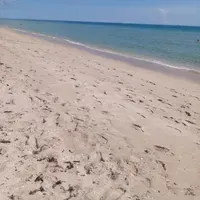
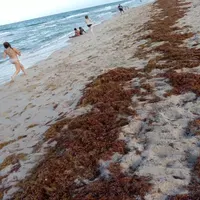
The left side of the picture below was taken about four years ago. The right side is a recent photograph of the same beach. It shows the beach being partly covered by Sargassum.
Now, beach clean-up includes removing pieces of plastic interspersed within the Sargassum. There is less trash to trap plastics and non-biodegradable materials
And this also means that we would not need heavy equipment on the shore. Shore dwellers are safe
Then it easier for the community to take part in the retrieval process.
Smaller portions of Sargassum dry faster. It disintegrates easily.
The beach seems to have become more spacious.
Ready to walk?
Cleaner, fresher air. Embrace the benefits of the sea air on your respiratory system.
You have more visible walking space closer to the water.
And, you may get lucky and find beautiful, intricately designed shells
So show up. Step. Walk. Do your thing!
Cooler temperature
Fewer people, less traffic, less noise
Less Sargassum
Less obstruction